
Press Release 19 July 2024
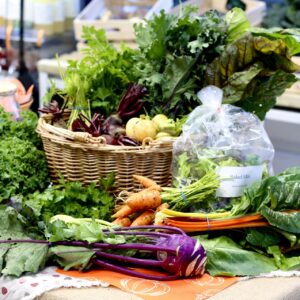
This month Carrick Greengrocers, Northern Ireland’s first community-owned fruit and veg shop, celebrates its first birthday and launches its Friendly Food Club. This innovative pilot scheme aims to make the greengrocer’s climate-friendly produce available to everyone in the community.
Food that is good for both people and the planet often comes at a higher cost than less healthy and/or planet-friendly alternatives. As well as bringing fruit and veg back to Carrick town centre demonstrating how the community can take the lead on regeneration, Carrick Greengrocers also want to provide high quality local produce to the community, reducing food miles, waste and long supply chains. The Carrickfergus pilot is part of the Bridging the Gap programme, a UK-wide initiative established to test ways in which we can make climate and nature friendly food accessible to all.
Through Bridging the Gap, pilots have been launched across the UK to explore ways to overcome this price gap, and make sustainable, healthy food – especially organic, or climate and nature friendly, fruit and vegetables – more accessible to people on lower incomes.
The Friendly Food Club at Carrick Greengrocers is a membership scheme, which will offer members 50% off so that they can include more organically grown fruit and vegetables in their weekly shopping without being out of pocket.
Carrick Greengrocers is working with local growers including Chris Dobbs and Jubliee Farm, who use climate and nature friendly growing methods. Carrick Greengrocers, a not for profit business that exists for the benefit of the community, are making locally grown, good quality food more accessible to people in Carrick, as well as trialling new ways of doing business in the town centre to support community-led regeneration.
The programme was co-designed with people who had experience of using emergency food providers in Carrickfergus, and the community running and using The Larder in East Belfast. The pilot will run for a year and the evidence collected from members will be used to support proposals for changes to food policy in Northern Ireland and across the UK.
Beth Bell, one of the founding directors at Carrick Greengrocers, explained:
“We are delighted to be part of Bridging the Gap, because we know that nature-friendly food tastes better, lasts better, is better for our wellbeing, and is better for the planet. It is not right that people on low incomes can’t access this food as it is not always affordable, and this is why we have established the Friendly Food Club.
Having affordable access to nutritious, delicious, locally grown veg is a human right, and we are proud to be working with local growers and farmers to make this happen in Carrick.”
One of the growers supporting the programme is Chris Dobbs, who owns a market garden using chemical free, no dig methods in Carrickfergus. He added:
“As a farmer my aim is to grow crops that are rich in flavour and nutrients. Consumers are keen for a healthy and sustainable option but unfortunately it’s not always affordable. I’m particularly excited by this project as it will allow more people to connect with healthy, local and sustainable food.”
Bridging the Gap is a partnership between Sustain, Growing Communities, the Alexandra Rose Charity, Nourish NI, Nourish Scotland and Food Sense Wales.
Another pilot is being delivered from a Newtownards farm, where families on low incomes can access a weekly veg box scheme making organically produced vegetables for a 50% discount. Through the pilot, Ben Vista Farm will supply up to 30 families with a weekly selection from the forty varieties of veg they have planted until Christmas 2024.
Hannah Gibbs, Programme Manager for Bridging the Gap said “We are thrilled to be able to partner with Northern Ireland’s first community-owned greengrocer to explore the potential for membership models to open up access to climate-friendly food for people experiencing lower incomes.Ethical business models, which pay farmers a fair price and bring wealth back into their communities, are key to the growth of a more accessible and affordable veg that is better for the health of people and planet. We look forward to sharing the learning from this pilot for nation-wide policy change.”